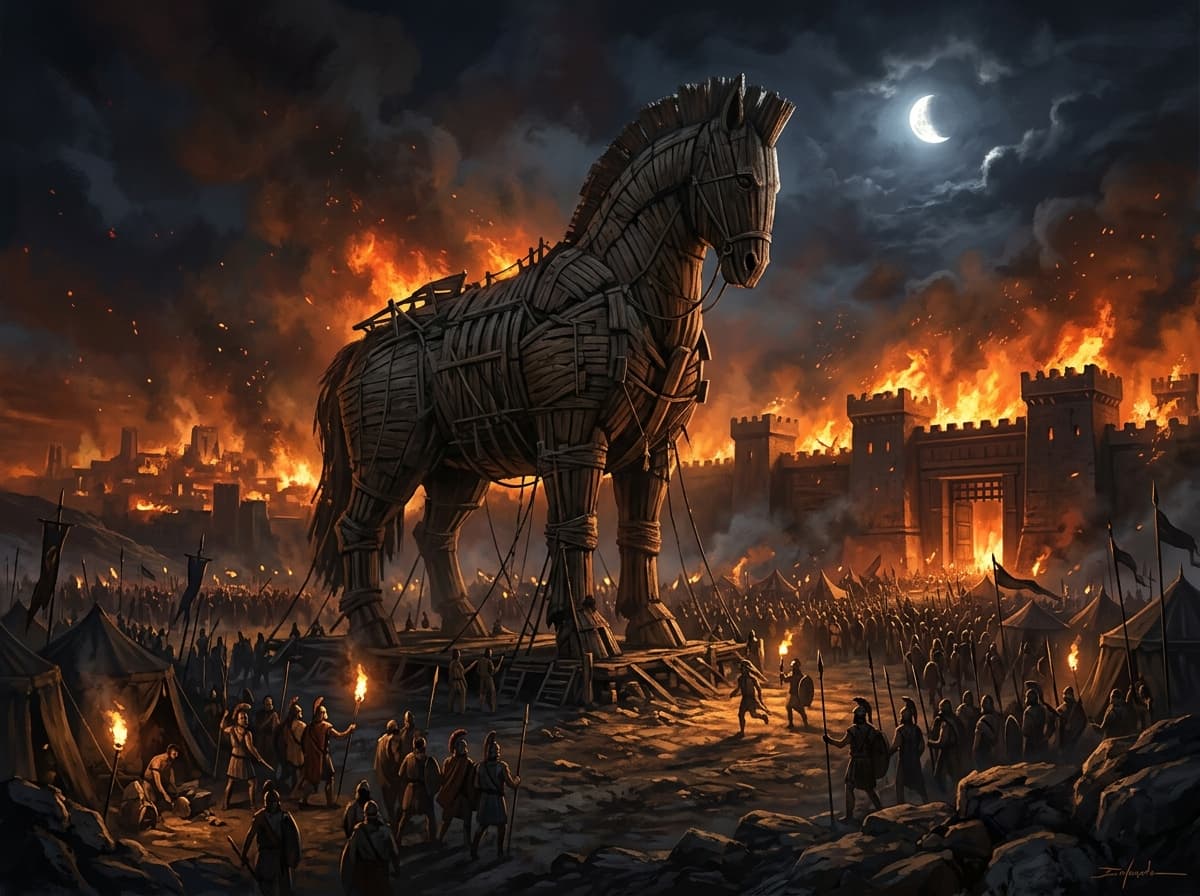
 第 1 冊📘 CEFR A2・初級
《海克力士十二試煉》希臘英雄有聲書全系列共 2 冊
海克力士:猛獅與九頭蛇的初試煉
Monsters of the Wild: The Lion and the Hydra
宙斯之子海克力士為了洗刷心靈罪咎,接受國王尤里斯修斯的十二項不可能試煉。他赤手空拳勒斃刀槍不入的尼米亞猛獅,身披獅皮為甲;更在勒拿沼澤與斬一長二的九頭巨蛇激戰,以火封傷口破除不死魔咒,展現勇氣與智謀的初登峰。
CEFR A2・初級⏱️ 約 9 分鐘📝 1184 字
《海克力士十二試煉》希臘英雄有聲書・第 1 冊第 1 / 52 句
海克力士:猛獅與九頭蛇的初試煉
Monsters of the Wild: The Lion and the Hydra
0:00
故事全文(1/52)
字級
第 1 段
In the ancient world of heroes and monsters, no name shone with greater glory or struck deeper terror into the hearts of beasts than Hercules—or Heracles, as the Greeks called him. He was the son of Zeus, the King of the Gods, and the mortal queen Alcmene. From the moment of his birth, Hercules was endowed with strength so colossal that even as a baby in his cradle, he strangled two giant venomous serpents sent by Hera with his bare hands.
第 2 段
As Hercules grew into manhood, his physical power became legendary across the lands. He could uproot ancient oak trees with one pull, shatter stone boulders with a single blow of his fist, and outrun the swiftest stallions. Yet with great power often comes great tragedy. Hera, Queen of the Gods, never ceased her jealousy toward Zeus's mortal son. In a cruel twist of divine malice, Hera cast a temporary spell of madness over the hero, causing him in his confusion to commit a terrible crime against his own family.
第 3 段
When the dark spell lifted and Hercules realized the horror of what he had done, he was crushed by an ocean of remorse and grief. He wept bitterly in the wilderness and traveled to the sacred Oracle of Delphi to seek purification for his soul. The Oracle spoke with the solemn voice of Apollo: 'To cleanse your soul and win immortality among the gods, you must travel to Tiryns and serve King Eurystheus for twelve years, performing whatever twelve labors he commands.'
第 4 段
King Eurystheus was a cowardly, spiteful ruler who trembled at the mere sight of Hercules. Jealous of the hero's renown, Eurystheus plotted to assign twelve impossible, deadly tasks, fully expecting each monstrous trial to destroy the mighty son of Zeus.
第 5 段
For the First Labor, Eurystheus commanded: 'Bring me the skin of the Nemean Lion!' The Nemean Lion was a terrifying supernatural beast that stalked the hills of Nemea, slaughtering villagers and livestock. Its golden fur was enchanted and impenetrable: bronze arrows bounced off its chest like pebbles, and iron spears shattered against its hide as if striking solid stone.
第 6 段
Hercules traveled to the rocky hills of Nemea carrying his bow and a massive club carved from an entire wild olive tree. He tracked the beast to a dark mountain cave that had two entrances. Hercules rolled huge boulders to block one exit, ensuring the monster could not flee, and entered the cavern through the other.
第 7 段
As the colossal lion lunged with a deafening roar, Hercules fired three bronze-tipped arrows straight into its chest, but they fell uselessly to the cave floor. The lion leaped with flashing claws. In an instant, Hercules dropped his weapons and lunged forward, locking his massive arms around the beast's thick neck. In a titanic contest of raw muscle and unbreakable will, Hercules squeezed with all his divine might until the monster finally gasped its last breath.
第 8 段
When Hercules tried to skin the beast, his bronze knife dulled and broke against the hide. Using his wits, Hercules took one of the lion's own razor-sharp claws to slit the enchanted pelt. He draped the golden skin around his shoulders as an impenetrable cloak and wore the lion's head as a helmet, creating an iconic armor that would protect him through all his future trials.
第 9 段
When Hercules returned to Tiryns wearing the roaring lion's head, King Eurystheus was so terrified by the hero's ferocious appearance that he leaped into a giant bronze storage jar buried in the floor and refused to come out, ordering that Hercules should never again enter the city gates.
第 10 段
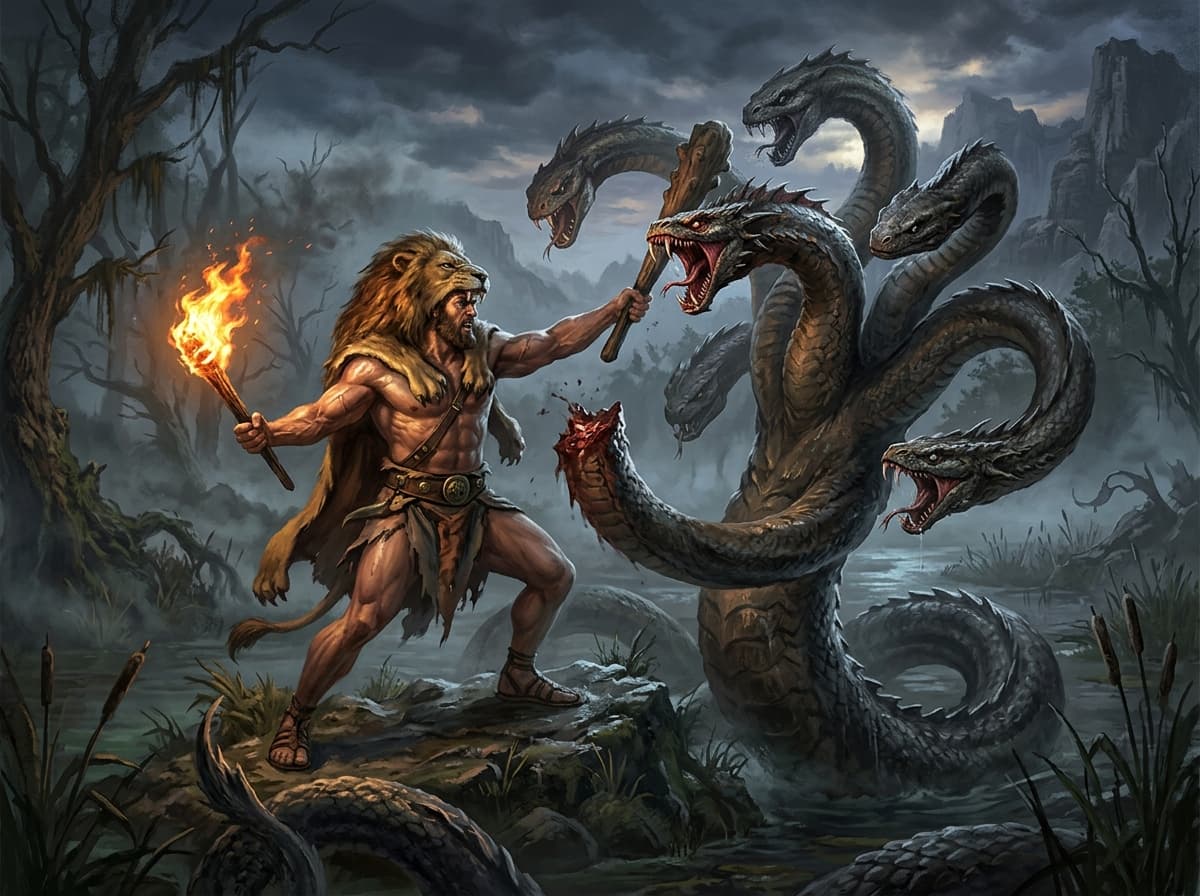
Eurystheus immediately devised a more horrifying Second Labor: 'Go to the murky swamps of Lerna and destroy the Lernaean Hydra!' The Hydra was a nightmarish, multi-headed water dragon whose breath was so venomous that anyone who inhaled its mist died instantly. Worse still, the monster had nine serpentine heads—and whenever one head was chopped off, two new heads instantly sprouted in its place!
第 11 段
Hercules rode to the poisonous swamps of Lake Lerna in a chariot driven by his loyal nephew, Iolaus. Covering his mouth and nose with a cloth, Hercules fired flaming arrows into the dense reed beds until the monstrous Hydra hissed in rage and slithered from its murky lair.
第 12 段
Hercules leaped forward with his sword and severed one of the hissing heads, but to his dismay, two identical heads instantly grew from the bloody stump! To make matters worse, Hera sent a colossal crab to pinch Hercules' heel. Hercules crushed the crab beneath his heel, but realized that brute force alone would only multiply the Hydra's deadly power.
第 13 段
Calling out to his nephew, Hercules devised a brilliant counter-strategy: 'Iolaus! Light pine torches and bring them here! The moment I sever a head, burn the stump with fire before it can sprout!'
第 14 段
With perfect teamwork, Hercules cut off each serpentine head one by one, and Iolaus immediately applied blazing torches to the raw wounds, searing the flesh and preventing any new heads from growing. Finally, only the ninth, immortal head remained. Hercules sliced it off with one mighty blow, buried the immortal head deep beneath a colossal boulder beside the road, and dipped his arrows into the Hydra's black, toxic blood, giving his weapons a lethal poison that no foe could survive.
第 15 段
For his Third Labor, Hercules was sent to capture the Ceryneian Hind, a sacred deer with golden horns and bronze hooves dedicated to Artemis, goddess of the hunt. Because it was forbidden to harm the sacred animal, Hercules could not use weapons; he pursued the swift deer tirelessly across mountains, rivers, and forests for an entire year until it collapsed from exhaustion, capturing it gently in his arms.
第 16 段
For his Fourth Labor, Hercules traveled to the snow-covered slopes of Mount Erymanthus to capture the ferocious Erymanthian Boar alive. Hercules chased the monstrous wild pig through mountain valleys, driving it into deep, soft snowbanks where its short legs became stuck, allowing him to bind it safely in heavy chains.
第 17 段
For his Fifth Labor, Eurystheus gave Hercules a humiliating task: clean the colossal stables of King Augeas, which held three thousand cattle and had not been cleaned in thirty years, in a single day. Instead of shoveling by hand, Hercules displayed his engineering genius: he dug channels to divert the waters of two mighty rivers, the Alpheus and Peneus, routing the rushing currents directly through the stables to wash away decades of filth in a matter of hours.
第 18 段
For his Sixth Labor, Hercules traveled to Lake Stymphalia to defeat the Stymphalian Birds—monstrous flocks with bronze beaks and metallic feathers that shot down like deadly arrows. Athena gifted Hercules a pair of bronze rattles forged by Hephaestus. Clashing the rattles upon a high cliff, Hercules created a terrifying din that drove the birds into the open sky, shooting them down with his poisoned arrows.
第 19 段
Labor after labor, the legendary son of Zeus triumphed over nature's wildest terrors. He proved to gods and mortals alike that true heroism requires not only unmatched physical strength, but patience, mental sharpness, and a steadfast heart in the face of impossible odds.
海克力士:猛獅與九頭蛇的初試煉
In the ancient world of heroes and monsters, no name shone with greater glory or struck deeper terror into the hearts of beasts than Hercules—or Heracles, as the Greeks called him.
自動播放下一集(5秒)
《海克力士十二試煉》希臘英雄有聲書・第 2 冊:海克力士:世界盡頭的金蘋果與地獄犬
《海克力士十二試煉》希臘英雄有聲書 系列章節目錄
本次閱讀生字複習
你還沒有收藏這本書的生字
點擊內文中任何一個單字,按下「⭐️ 加入我的生字本」,讀完後就會在這裡出現複習卡片。