 Book 1📘 CEFR A2・Elementary
Prometheus — Classic Greek Myth Series1 books in this series
Prometheus and the Fire of Olympus
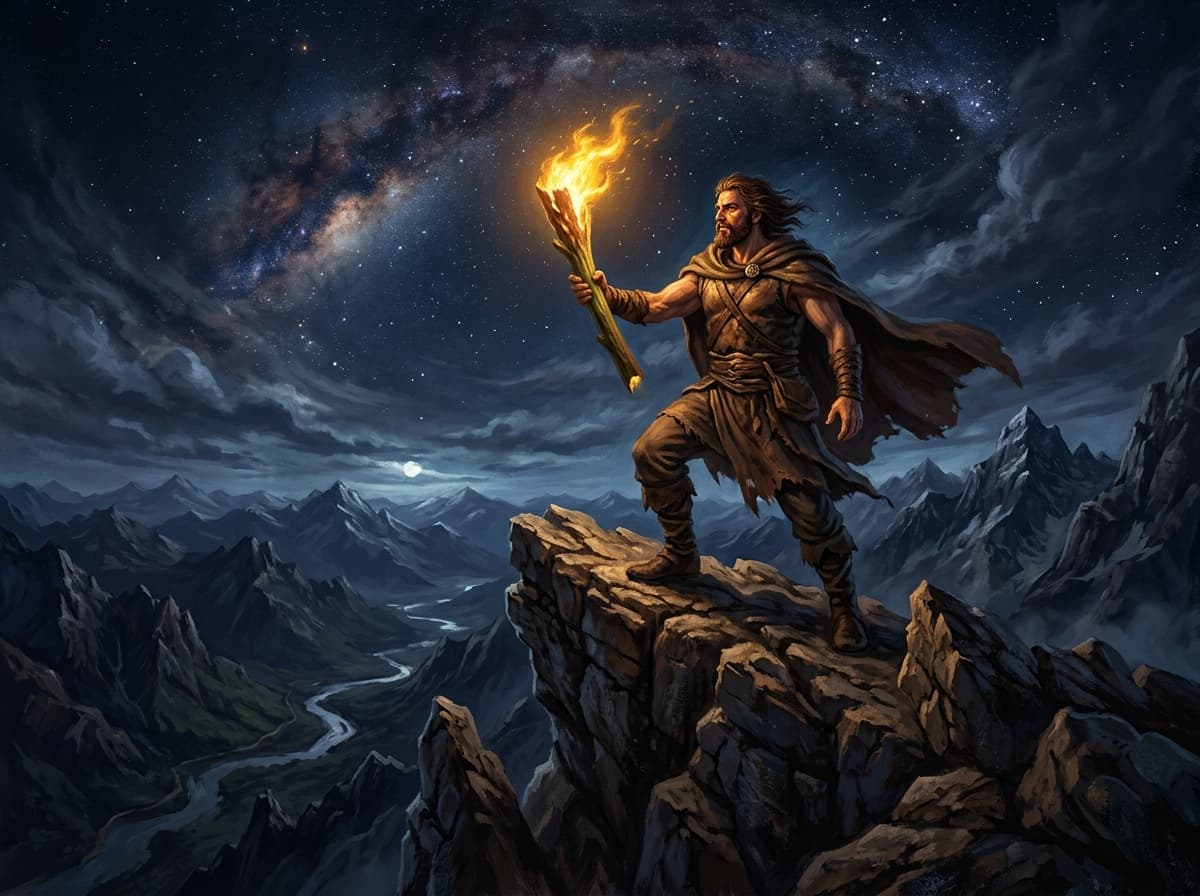
The Titan Prometheus defies Zeus's strict decree to bring sacred fire to freezing humanity. Teaching mankind the arts of warmth, metalworking, and reason, he endures eternal chains upon the frozen Caucasus cliffs as the enduring symbol of courage and enlightenment.
CEFR A2・Elementary⏱️ ~8 min📝 1108 words
Prometheus — Classic Greek Myth Series・Book 1Sentence 1 / 69
Prometheus and the Fire of Olympus
0:00
Full story(1/69)
Text size
Paragraph 1
In the dawn of time, before mortal cities dotted the valleys of Greece, the world was ruled by the mighty Titan gods. Among them was Prometheus, whose name meant 'forethought'. Unlike his brother Epimetheus, who acted hastily without thinking of tomorrow, Prometheus possessed deep wisdom, a sharp vision of the future, and a compassionate heart that cared for the smallest creatures on earth.
Paragraph 2
When the gods created living things, Epimetheus was given the task of distributing gifts to every beast. To the lion he gave sharp fangs and powerful claws; to the eagle, soaring wings and keen sight; to the stag, swift legs; and to the bear, thick fur to endure the harshest winters. But Epimetheus was careless and gave away all the gifts before he reached humankind. Mortal humans were left naked, frail, and defenseless, shivering in dark caverns beneath the earth.
Paragraph 3
Prometheus looked down upon these helpless humans with profound pity. He saw them eating raw roots and frozen meat, living in constant terror of wild beasts and the freezing cold of winter nights. Without warmth or knowledge, human life was miserable and fleeting. Prometheus resolved that he would not leave humanity to perish in darkness.
Paragraph 4
Prometheus climbed the majestic heights of Mount Olympus to speak with Zeus, the supreme King of the Gods. 'Mighty Zeus,' Prometheus pleaded, 'look down at mortal humans. They are cold, hungry, and helpless. Grant them the gift of fire, so they may warm their homes, cook their food, and learn the arts of civilization.'
Paragraph 5
Zeus's brow darkened with anger, and his voice rumbled like thunder through the marble halls. 'No, Prometheus!' Zeus commanded coldly. 'Fire is the sacred treasure of the immortal gods. If mortals possess fire, they will become wise, proud, and strong. Soon they will build great kingdoms and cease to worship Olympus. Mortals must remain ignorant and weak, so they never challenge divine authority.'
Paragraph 6
Prometheus listened in silence, but his heart burned with righteous indignation. He knew that a ruler who hoards light and warmth to keep others in fear is not a protector, but a tyrant. He resolved to defy the King of the Gods, even if it cost him his freedom.
Paragraph 7
Under the cover of night, Prometheus made his way secretly into the fiery celestial forge of Hephaestus, the god of fire and craftsmanship. He carried with him a long, hollow stalk of giant green fennel. Reaching into the sacred divine hearth, Prometheus touched the dry pith inside the stalk to a glowing celestial ember. The fire smoldered safely within the fennel stalk, hidden from the watchful eyes of the gods.
Paragraph 8
Holding the glowing stalk close to his chest, Prometheus descended swiftly from the snowy peaks of Olympus to the dark plains below. He gathered the shivering human elders and gently blew upon the spark, igniting a bundle of dry twigs. For the very first time in human history, bright, golden fire danced upon the mortal earth!
Paragraph 9
Prometheus remained among mortals for many seasons, patiently teaching them how to tend the flame and harness its magical power. He showed them how to cook food, how to melt bronze and forge iron tools, how to bake clay into bricks and pottery, and how to build sturdy wooden homes that could withstand winter storms.
Paragraph 10
He did not stop with fire alone. Prometheus taught humanity how to read the stars to guide their ships across the seas, how to tame oxen for the plow, how to write language into symbols, and how to brew healing medicines from meadow herbs. With the spark of fire came the spark of human reason and civilization.
Paragraph 11
Smoke from thousands of warm hearths began to rise into the crisp morning sky. From his golden throne on Olympus, Zeus looked down and saw glowing lights scattered across valleys, coasts, and mountain ridges where once there was only pitch darkness. Mortals were singing, crafting, and thriving in the light.
Paragraph 12
Zeus's wrath was terrifying. He roared with fury at the betrayal and summoned his loyal servants, Kratos and Bia, the brutal spirits of Force and Violence. 'Seize the traitor Prometheus!' Zeus commanded. 'Take him to the farthest edge of the earth and chain him where he will suffer for all eternity!'
Paragraph 13
The cruel servants seized Prometheus and dragged him to the wild, desolate cliffs of the Caucasus Mountains. There, Hephaestus was commanded to forge unbreakable chains of black adamantine iron. With heavy blows of his hammer, Hephaestus riveted Prometheus's wrists and ankles to the freezing stone face of a sheer mountain precipice, high above the clouds.
Paragraph 14
Prometheus hung suspended between heaven and earth, unable to move a limb or rest his head. Icy mountain gales battered his body by night, and the scorching summer sun beat down upon him by day. Yet Zeus's cruelty did not end with chains.
Paragraph 15
Each morning, Zeus sent a giant eagle with razor-sharp talons down from the heavens. The monstrous bird tore open the Titan's flesh to feast upon his liver. Because Prometheus was an immortal god, his wound healed completely each night under the starlight, only for the agony to repeat when dawn broke.
Paragraph 16
Through centuries of unimaginable torment, Prometheus never wavered, wept, or begged for mercy. One day, Zeus sent Hermes, the winged messenger god, down to the mountain peak with an offer. 'Prometheus,' Hermes said, 'Zeus knows you possess a secret prophecy about his future. Tell him who will overthrow him, bow before his throne, and he will set you free from this stone.'
Paragraph 17
Prometheus looked at Hermes with eyes filled with unbreakable dignity and pride. 'Go back to your master, winged messenger,' Prometheus answered with a voice that echoed across the mountains. 'I would rather be chained to this barren rock for ten thousand years than become the flattering slave of a tyrant god!'
Paragraph 18
Hermes was shaken by the Titan's courage. 'Do you not see that your stubbornness brings you endless suffering?' Hermes asked. 'Suffering in the pursuit of truth and freedom is nobler than comfort bought with servitude,' Prometheus replied calmly.
Paragraph 19
Centuries passed, and the story of the bound Titan spread across the world. Mortals looked up at the stars and whispered prayers of gratitude to the great benefactor who had sacrificed his own freedom so that humanity might walk in the light.
Paragraph 20
Ages later, the great hero Hercules would climb the Caucasus mountain, slay the eagle with a golden arrow, and shatter the adamantine chains with his colossal strength, setting the Titan free at last. But Prometheus's true triumph was already won: the fire he brought to humankind would never be extinguished, burning as an eternal symbol of courage, enlightenment, and the unbreakable human spirit.
Prometheus and the Fire of Olympus
In the dawn of time, before mortal cities dotted the valleys of Greece, the world was ruled by the mighty Titan gods.
Auto-playing next book(5s)
Orpheus and Eurydice — Classic Greek Myth Series · Book 1: Orpheus and Eurydice: The Song in the Shadow
Vocabulary from this book
You haven't saved any words from this book yet
Tap any word in the story and hit "⭐️ Save to my vocabulary" — review cards will show up here once you finish.