 第 1 冊⚡ CEFR B2・中高級
《海倫凱勒》名人傳記有聲書全系列共 1 冊
海倫凱勒:黑暗與寂靜中的光
Helen Keller: Light in Darkness and Silence
一場疾病奪走了海倫凱勒的視力與聽力,讓她一度陷入孤立與暴怒。家庭教師蘇利文老師的耐心引導,在水泵邊那個「水」字的頓悟時刻徹底改變了她的人生。海倫後來以優異成績從大學畢業,並終生投身身心障礙者權益倡議。
CEFR B2・中高級⏱️ 約 9 分鐘📝 1096 字
《海倫凱勒》名人傳記有聲書・第 1 冊第 1 / 35 句
海倫凱勒:黑暗與寂靜中的光
Helen Keller: Light in Darkness and Silence
0:00
故事全文(1/35)
字級
第 1 段
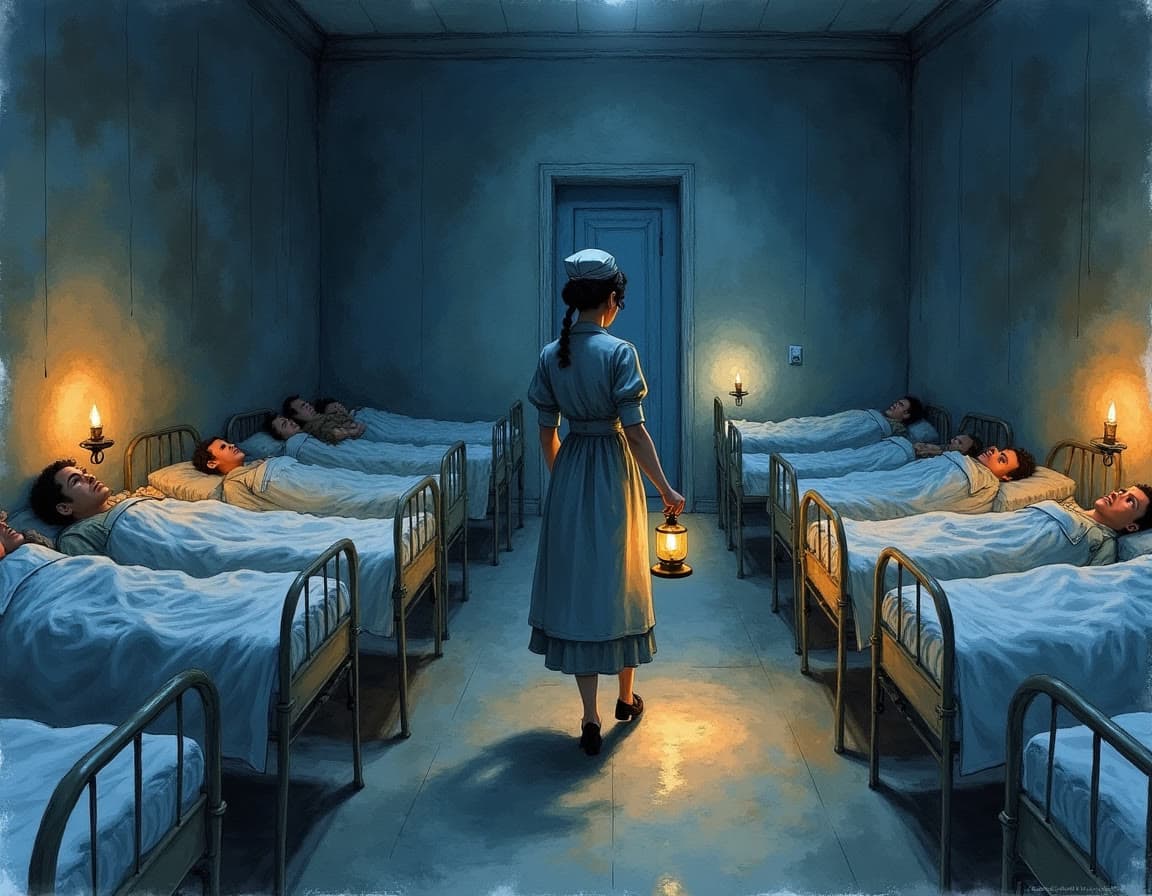
Helen Keller was born in 1880 in Alabama as a healthy infant, but at just nineteen months old, a severe and mysterious illness left her permanently unable to see or hear. Isolated in a world of near-total silence and darkness, and without any effective way to communicate with those around her, the young Helen grew increasingly frustrated, willful, and prone to violent, uncontrollable outbursts of frustration.
第 2 段
Anne Sullivan herself had faced considerable hardship long before arriving at the Keller household. Partially blind from a childhood illness and raised for years in a grim, overcrowded almshouse after her own mother's death, she understood suffering and isolation intimately, an understanding that would prove essential to her extraordinary patience and empathy in reaching young Helen.
第 3 段
By the time she reached the age of six, Helen's desperate family had essentially run out of practical ideas for how to reach her. On the advice of the renowned inventor Alexander Graham Bell, whose own wife was deaf, they finally reached out to the Perkins Institute for the Blind, requesting that the school send a teacher capable of working with their profoundly isolated and increasingly difficult daughter.
第 4 段
The school sent a partially sighted twenty-year-old graduate named Anne Sullivan, who arrived at the Keller household in 1887 and would go on to change Helen's entire life forever. Sullivan understood intuitively that Helen needed far more than mere discipline; she urgently needed an actual language, some reliable way of connecting the physical objects and abstract concepts around her to specific, meaningful words.
第 5 段
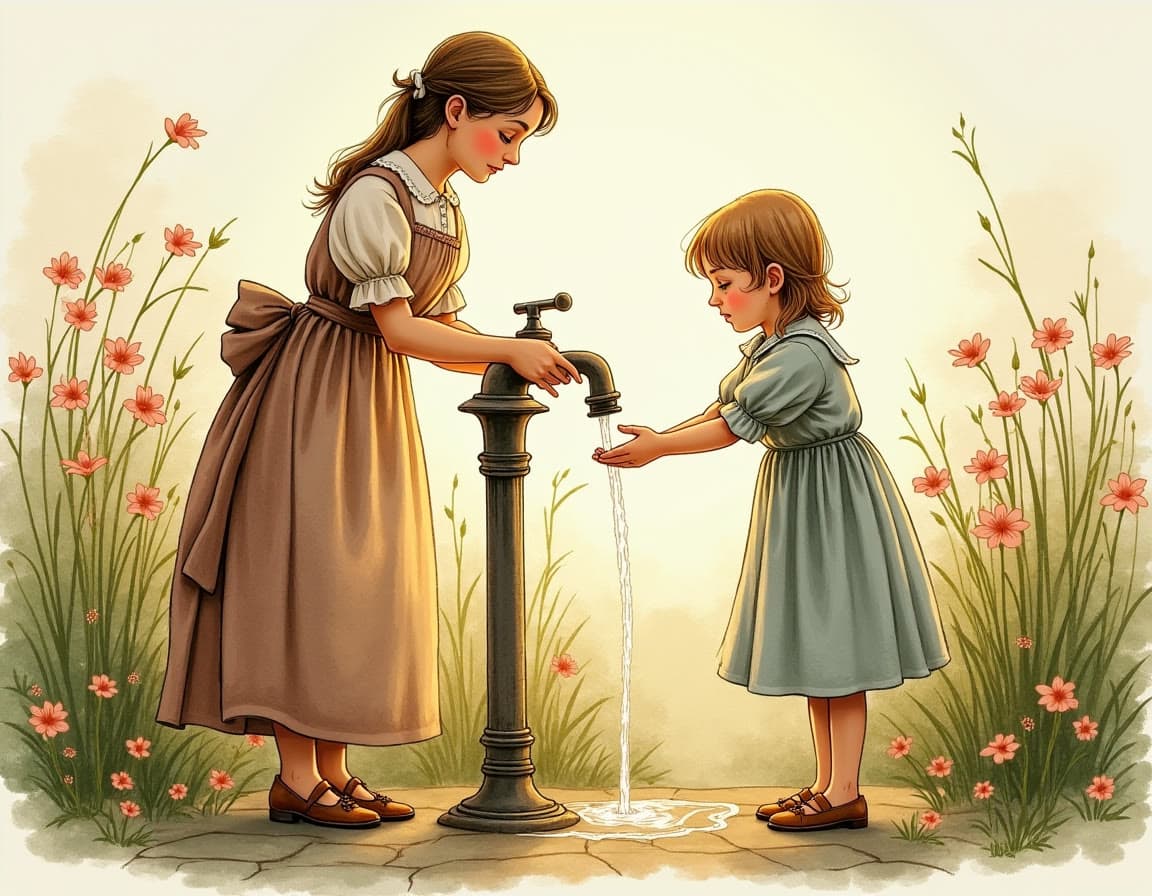
For weeks, Sullivan patiently spelled out simple words into Helen's small hand using touch, but the concept that these particular patterns of finger movements represented actual objects and ideas simply refused to click. Then, one now-famous morning at an outdoor water pump, Sullivan pumped cool water directly over Helen's hand while simultaneously spelling out the word water into her palm again and again.
第 6 段
In that single extraordinary moment, something profound finally clicked deep within Helen's mind. She later wrote that the mysterious veil obscuring language had suddenly and completely lifted, and she immediately grasped, with electrifying clarity, that everything in her world possessed its own distinct name. By the very end of that single remarkable day, she had eagerly learned thirty entirely new words.
第 7 段
From that pivotal breakthrough onward, Helen's progress was nothing short of astonishing. With Sullivan's unwavering, devoted assistance, she rapidly learned to read Braille fluently, to write with reasonable clarity, and even to speak, though her speech always remained somewhat difficult for unfamiliar listeners to fully understand. In 1904, she graduated with genuine honors from Radcliffe College, becoming the very first deaf-blind person in recorded history to earn a bachelor's degree.
第 8 段
College itself presented enormous practical challenges that a sighted, hearing student would never have to face. Sullivan attended nearly every lecture alongside Helen, patiently spelling entire lessons into her hand word by word, while Helen laboriously typed her assignments on a specially adapted typewriter, and vast quantities of her required reading had to be painstakingly transcribed into Braille well in advance.
第 9 段
During these same years, Helen also proved to be a genuinely gifted writer, publishing her acclaimed memoir The Story of My Life while still an undergraduate student. The book was quickly translated into dozens of languages and remains, more than a century later, one of the most widely read and admired autobiographies ever written by a person living with significant disability.
第 10 段
Rather than quietly retreating into a private, comfortable life, Helen became a passionate, tireless public advocate for people living with disabilities. She traveled extensively around the entire world, delivering countless lectures, and she wrote a dozen influential books, sharing her genuinely remarkable personal story while forcefully campaigning for improved education, expanded rights, and greater opportunities for disabled individuals everywhere.
第 11 段
Alexander Graham Bell, the very man whose advice had originally connected Helen's family to Anne Sullivan, remained a lifelong friend and steady source of encouragement, sharing his own family's firsthand experience with deafness and his genuine fascination with new technologies designed to help people overcome sensory limitations of every kind.
第 12 段
In a surprising chapter rarely emphasized in popular accounts, Helen briefly performed in vaudeville theater during the 1920s, appearing on stage alongside Anne Sullivan to answer audience questions about her extraordinary life. Though some critics considered the venture undignified for so celebrated a figure, Helen herself defended it cheerfully as an effective, entertaining way to reach ordinary working people who might never otherwise read one of her books.
第 13 段
Helen's political and social activism extended considerably beyond disability rights alone. She was also an outspoken advocate for women's suffrage, for organized labor and workers' rights, and for numerous other progressive social causes, using her considerable public platform and hard-won fame to consistently champion those who otherwise had comparatively little voice within society.
第 14 段
Anne Sullivan remained loyally by Helen's side for nearly fifty years, right up until Sullivan's own death in 1936, and their profound bond is still widely remembered today as one of history's most inspiring examples of genuine teaching and lasting friendship combined. Helen continued her tireless advocacy work for several more decades even after losing her devoted companion and lifelong teacher.
第 15 段
When Helen Keller died in 1968, she left behind an extraordinary and enduring legacy that had already fundamentally transformed public understanding of disability. Once written off by nearly everyone as hopelessly unteachable, she instead became one of the twentieth century's most admired and influential figures, definitively proving that severe physical limitation need never define the true limits of the human spirit.
第 16 段
The dramatic scene of Helen's breakthrough at the water pump remains one of the most frequently told stories in the entire history of education, retold in classrooms, plays, and films across many decades. Yet what truly distinguishes her legacy is not merely that single miraculous morning, but the six remarkable decades of hard-won achievement and tireless advocacy that followed it.
第 17 段
Helen's remarkable friendship with the celebrated writer Mark Twain began during her college years, when he was so struck by her intelligence and wit that he helped arrange a wealthy benefactor's financial support for her education, later calling her, with evident admiration, one of the most astonishing people of the entire century.
第 18 段
Helen's determination extended into everyday matters most people take entirely for granted; she taught herself to recognize familiar visitors by touching their faces and clothing, to navigate her own home confidently through carefully memorized counts of footsteps, and even, remarkably, to enjoy swimming, horseback riding, and other outdoor activities most observers assumed were simply impossible for someone with her particular combination of disabilities.
海倫凱勒:黑暗與寂靜中的光
Helen Keller was born in 1880 in Alabama as a healthy infant, but at just nineteen months old, a severe and mysterious illness left her permanently unable to see or hear.
本次閱讀生字複習
你還沒有收藏這本書的生字
點擊內文中任何一個單字,按下「⭐️ 加入我的生字本」,讀完後就會在這裡出現複習卡片。